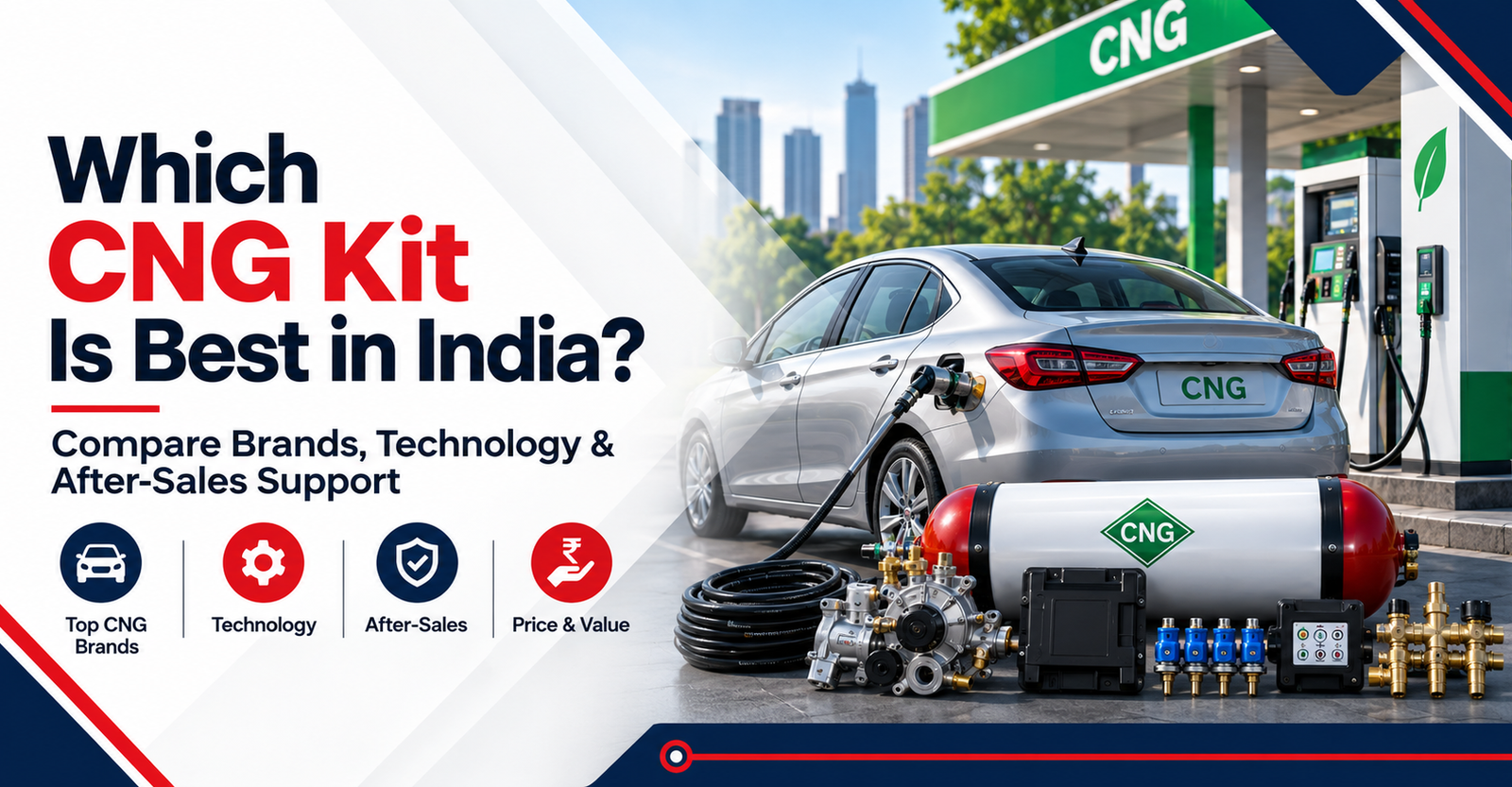
Which CNG Kit Is Best for a Car? Complete Guide to Choosing the Right Kit

Choosing a CNG kit for a car is not simply a matter of picking the most popular brand or the lowest price. The right system needs to be compatible with the vehicle, engine and fuel-injection system. Installation quality, calibration, certification, warranty and after-sales support also matter.
For this reason, the answer to “Which CNG kit is best for a car?” depends on the specific vehicle and the type of CNG system being considered.
This guide explains the main types of CNG kits, the components you should compare and the factors to check before converting a petrol car to CNG.
What Is a CNG Kit?
A CNG conversion kit allows a compatible petrol vehicle to operate using compressed natural gas as an alternative fuel.
A modern CNG conversion system can include:
- CNG cylinder
- High-pressure pipe
- Filling valve
- Shut-off valve
- Pressure regulator or reducer
- CNG injectors
- Electronic control unit (ECU)
- Gas filters
- Pressure and temperature sensors
- Wiring and electrical connections
- Fuel selector switch
The exact components depend on the vehicle, engine and conversion system.
A properly configured system works alongside the vehicle’s original engine-management system to control CNG delivery.
Which CNG Kit Is Best for a Car?
There is no single CNG kit that is best for every car.
The right choice depends on:
- Vehicle make and model
- Engine configuration
- Number of cylinders
- Fuel-injection system
- Emission standard
- CNG system compatibility
- Certification and approval
- ECU and injector specifications
- Installation quality
- Warranty
- Availability of service and spare parts
For many modern fuel-injected vehicles, a properly matched sequential CNG system can provide electronically controlled gas delivery. However, the specific kit should always be selected according to the vehicle’s approved application and technical requirements.
What Is a Sequential CNG Kit?
A sequential CNG system uses electronic controls and injectors to regulate the amount of CNG delivered to the engine.
The CNG ECU receives information from the vehicle and system sensors and uses that information to control fuel delivery.
Key components generally include:
- ECU
- Sequential injectors
- Pressure reducer
- Sensors
- Gas filter
- Wiring harness
- Fuel selector
The major advantage of this type of system is that fuel delivery can be calibrated more precisely for the specific engine.
However, the system still needs correct installation and calibration. A high-quality kit cannot compensate for poor installation.
Why Vehicle Compatibility Matters
One of the biggest mistakes buyers make is choosing a CNG kit based only on the brand.
A kit that works well on one vehicle may not be the appropriate configuration for another vehicle.
Before purchasing, provide the installer with:
- Vehicle manufacturer
- Exact model
- Manufacturing year
- Engine size
- Number of cylinders
- Petrol fuel system
- Emission standard
The installer should then confirm whether the proposed system is suitable for that particular vehicle.
Best CNG Kit for BS6 Cars
BS6 vehicles generally use sophisticated electronic engine-management systems and emission-control equipment.
Therefore, owners of newer vehicles should pay particular attention to:
- ECU compatibility
- Injector response
- Sensor integration
- Calibration
- Emission requirements
- Vehicle-specific application
- Installation quality
Do not assume that a kit advertised as “BS6 compatible” is automatically suitable for every BS6 car. The exact vehicle and engine application should be verified.
Important Components of a CNG Kit
1. CNG ECU
The ECU controls the electronic operation of the CNG system.
It determines how and when CNG should be delivered based on available sensor information and system calibration.
2. CNG Injectors
Injectors control the delivery of CNG to the engine.
Injector characteristics can affect system response, calibration and fuel delivery.
3. Pressure Reducer
CNG is stored in the cylinder at high pressure. The reducer regulates the pressure before gas reaches the engine-side components.
4. Filters
Filters help remove contaminants from the gas supply before it reaches sensitive components.
5. Sensors
Sensors provide information used by the CNG system for monitoring and control.
6. CNG Cylinder
The cylinder stores compressed natural gas.
Cylinder selection should comply with applicable standards and vehicle requirements.
How to Choose a CNG Kit for Your Car
Step 1: Check Vehicle Compatibility
Start with the exact vehicle model and engine.
Do not buy a kit simply because it is compatible with another car using the same fuel.
Step 2: Check the CNG System Type
Ask whether the system is:
- Sequential
- Closed-loop
- Open-loop
- Another application-specific configuration
For modern electronically controlled vehicles, the system should be appropriate for the vehicle’s engine-management architecture.
Step 3: Compare the ECU and Injectors
Ask the installer to provide the exact ECU and injector models being proposed.
Step 4: Verify Certification and Documentation
Ask for applicable approval and certification documentation for the kit and vehicle application.
Step 5: Evaluate the Installer
Installation quality is one of the most important parts of the conversion.
Ask whether the installer provides:
- Proper wiring
- Secure component mounting
- Leak testing
- ECU calibration
- Diagnostic testing
- Installation documentation
Step 6: Compare Warranty Terms
Do not compare brands using warranty duration alone.
Check:
- What components are covered?
- Is labor covered?
- What are the exclusions?
- Is authorized installation required?
- What maintenance conditions apply?
Step 7: Check Local Service Availability
A technically good system can become inconvenient if replacement parts or trained technicians are difficult to find.
How Much Does a CNG Kit Cost?
CNG conversion costs vary significantly.
Factors include:
- Vehicle model
- Engine size
- Kit type
- ECU
- Injectors
- Reducer
- Cylinder
- Installation
- Certification/documentation
- Location
For this reason, buyers should request a complete vehicle-specific quotation.
Do not compare a kit-only price with another company’s complete installed price.
Is a More Expensive CNG Kit Better?
Not necessarily.
A higher price may reflect different components, configuration, installation or service arrangements.
When comparing two systems, consider:
Total value = Kit + Installation + Warranty + Service + Parts availability + Vehicle compatibility
A low initial price may not be attractive if installation quality or after-sales support is inadequate.
Why Installation Quality Matters
CNG systems require careful installation.
Poor installation can lead to problems such as:
- Incorrect fuel calibration
- Warning lights
- Poor drivability
- Gas leaks
- Electrical issues
- Reduced performance
- Increased maintenance requirements
The installer should follow the manufacturer’s installation and calibration requirements.
Why Consider Gastech Italy?
Gastech Italy develops CNG and LPG conversion systems for automotive applications.
When considering a Gastech system, vehicle owners should review:
- Applicable vehicle application
- System specifications
- Components
- Certification/documentation
- Installation requirements
- Warranty
- Dealer and service support
Gastech’s published information also references certification and approval-related standards for its products.
The most important step is to confirm the appropriate Gastech system for your exact vehicle before installation.
CNG Kit Buying Checklist
Before paying for a CNG conversion, ask:
- Is the kit compatible with my exact car?
- Which ECU will be installed?
- Which injectors will be used?
- Which reducer is included?
- What cylinder will be installed?
- Is the system sequential?
- What approvals apply?
- Who will install the system?
- How will calibration be performed?
- What does the warranty cover?
- Where can I get service?
- Are spare parts readily available?
- What is the complete installed cost?
Frequently Asked Questions
Which CNG kit is best for a car?
The best choice depends on the vehicle, engine, approved application, system configuration, installation quality and after-sales support. There is no universal CNG kit that is right for every car.
Which CNG kit is best for a BS6 car?
A properly matched sequential system can be suitable for many modern vehicles, but compatibility must be confirmed for the exact make, model and engine.
Is a sequential CNG kit better?
Sequential systems provide electronically controlled fuel delivery and can be suitable for modern fuel-injected vehicles when correctly matched and calibrated.
Does a CNG kit affect engine performance?
The result depends on the vehicle, system, calibration, installation and maintenance. A properly matched and calibrated system is important for consistent operation.
How much does a CNG conversion cost?
The cost varies by vehicle, system, cylinder, components, installation and location. Request a complete vehicle-specific quotation before making a purchase.
What should I check before installing a CNG kit?
Check compatibility, certification, components, installer experience, warranty, service availability and the total installed price.
Final Takeaway
The best CNG kit for your car is not necessarily the cheapest or the most widely advertised brand.
Focus on compatibility, system technology, components, certification, installation quality, warranty and after-sales support.
If you are considering a Gastech Italy CNG conversion system, start by checking the appropriate application for your exact vehicle and request a detailed quotation from an authorized source.